
Taxi Killer: Investing in Fraser Valley and Greater Vancouver
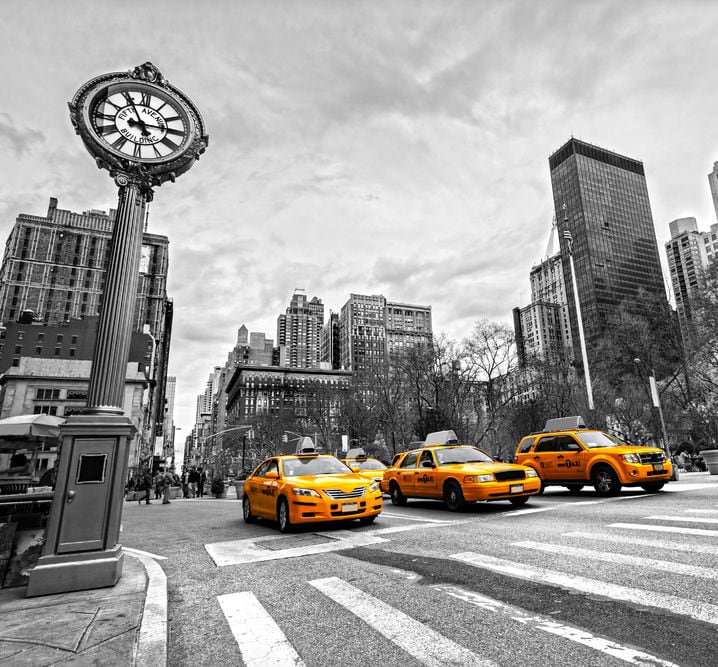
Supply and demand! This is one of the most fundamental concepts of economics and is the backbone of a market economy, according to investopedia.com. It is safe to say that stock markets, real estate markets, and business’s all rise and fall on this concept. Over the last 15 years the taxi companies in New York City have had a front row seat to this economic game called supply and demand. The taxi business is a regulated business and an operator needs a license or a medallion – a small license plate secured to the grill of the taxi (as it is known in New York) – to operate a taxi cab. Can you imagine the competition to buy medallions? In fact the City of New York has a limit on the number of taxi medallions for the city, making a taxi medallion an exclusive commodity. In 1947 a New York City medallion was valued on the open market at $2,500. Fast forward to 2001 and a medallion, if you could buy one on the open market, was selling for $250,000. By 2013 it had shot up to $1,320,000!
Then came Uber! The car-by-app service or the “private, no license, lower-cost taxi service”, better known in the taxi business as the “taxi killer”. In fact, many taxi drivers have been going to work as Uber drivers. Ridership dropped significantly and with that, the demand for medallions dropped. In fact, the downturn in ridership has put the market value for a medallion at a low $650,000, cutting the price by half in less than three years. Could this crazy swing of value for the medallion play out in the real estate market in Greater Vancouver Regional District, Fraser Valley, or anywhere else in the Canada? Is it possible for property over the last 15 year period to move from $250,000 to $1,320,000 and then fall to $650,000?
Gene Friedman, known as the New York City Taxi King and owner of 1100 medallions, believed he owned and operated a monopoly. A monopoly, in Gene’s mind, because the City of New York wasn’t issuing any more medallions and the exclusive medallion was increasing in value year after year. It appeared to be the perfect monopoly business until Uber showed up out of nowhere. Gene and the other taxi operators never saw the demise of their monopoly coming. Could there be an Uber real estate moment or movement that could change the landscape like Uber did to the taxi medallion? One recent example of the landscape changing significantly is when the Quintette coal mine closed down in the small town of Tumbler Ridge in 2001. The mine was the major employer in the area and when it closed, there were no jobs. No jobs and no reason to live in Tumbler Ridge. Homes were auctioned off by the 100’s as low as $28,000. Since then, the mine has reopened and hundreds of millions of dollars has been invested in the mine over the last decade, bringing property values up over $200,000. However, with much of the economy in Tumbler Ridge dependent on the mine and the jobs it provides, it is not unforeseeable that values could drop to $100,000 much like the taxi medallion did, losing 50% of its value in a short period of time.
The common thread for both the medallion and real estate values in Tumbler Ridge is that they were both monopolies, or so they believed. The exclusive medallion and the giant solo industry that supplied jobs to the entire work-force both depended on what I called ‘The Golden Goose’. But in these two cases, The Golden Goose either dies (mine closes) or gets replaced by an updated or better version (Uber). They both relied on the SINGLE golden goose.
I am not sure what Friedman could have done to protect his business from the Uber event. However, there are many ways to protect your real estate investments from a Tumbler Ridge event. The economic rules of supply and demand are always at play in the real estate market. The key to successful investing is to understand the 3 key drivers; demographics, financial, and emotional drivers. Demographic drivers include net migration, employment rates, housing starts, and first time buyers. Financial drivers include qualifications, interest rates, government regulations, affordability, home values, and incomes. Emotional drivers include inventory levels, days on market, sales volume, failed listings, and revitalization in the area. When these drivers are understood, studied, and applied to the market, the investor does not need to rely on the SINGLE golden goose for a safe and sound investment property.
Investing in Fraser Valley and Greater Vancouver are proving month after month, and year after year, to be safe and sound markets to invest in. Inventory levels in single family homes in many of the areas across the Greater Vancouver Regional District and Fraser Valley have been reduced by as much as 50%, with sales volume up as much as 25%, creating upward pressure on prices. Townhomes are also experiencing reduced inventory levels and sales volume increases; however, they’re not experiencing the same kind of upward pressure on prices. Condo inventory and sales on the other hand are static and in most areas is still a buyer’s market. An opportunity to pick up a great investment rental!
Below are highlights from the latest Fraser Valley Real Estate Board news release that gives a further snapshot on the Fraser Valley market:
Strong sales activity continues through August. In August, home sales in the Fraser Valley moderated in comparison to July’s record-setting pace, however, they remained elevated compared to historical norms for the month. There was a total of 1,734 property sales processed in August, an increase of 33 per cent compared to 1,302 sales during August of last year and a decrease of 21 per cent compared to July’s 2,184 sales.
In August, the total number of active listings in the Fraser Valley decreased 4 per cent compared to July, dropping to 7,407 listings. This represents a 21 per cent decrease from last year’s 9,403 active listings. The MLS® received 2,457 new listings in August, an increase of 3 per cent compared to August of last year.The MLS® Home Price Index benchmark price of a detached home in August was $629,400, an increase of 10.5 per cent compared to August of last year when it was $569,800. The MLS® HPI benchmark price of Fraser Valley townhouses increased 2.7 per cent going from $298,500 in August of last year to $306,700 last month. The benchmark price of apartments decreased year-over-year by 2.4 per cent, going from $196,700 in August of last year to $191,900 last month.
Investing in Fraser Valley and Greater Vancouver markets requires a knowledgeable investing team. Contact us today to learn how to become a savvy investor.
If you would like to receive a copy of the statistical market report contact us here. Looking to tour cash flowing properties? Click here to sign up for our next Investment Bus Tour!
By Randy Dyck
Personal Real Estate Corporation
604-807-4366 or randy@eximus.com
STR (Sell Through Rate) Formula = Sales ÷ Active Listings + Failed Listings + Sales


